Black men more often receive orchiectomy (P<0.001) vs other treatments, such as radical prostatectomy, TURP, chemotherapy, radiation, and any ADT (P<0.001)19
Mutations present in germ cells
Navigating the Comprehensive Testing Landscape in Advanced Prostate Cancer
Identifying BRCA1/2 Mutation Status at Metastatic Diagnosis Can Provide Insights Into Treatment Options, Prognosis, and Familial Risk1,2
PREDICTIVE

To inform your patients’ treatment plan1-3
PROGNOSTIC

BRCA1/2m increases risk for more aggressive disease and worse outcomes1
HEREDITARY RISK

To gauge familial risk1,2
BRCA1/2 or ATM Mutations May Lead to More Aggressive Disease and Worse Outcomes4
Median survival time is halved in patients with advanced prostate cancer who carry BRCA1/2 or ATM mutations4
In a retrospective study, a subgroup analysis evaluated the impact of BRCA1, BRCA2, or ATM gene mutations on median survival for men with metastatic prostate cancer (n=122)4
Comprehensive Tissue Testing May Identify More Patients With HRR Mutations, Including BRCA1/25-8

TUMOR TISSUE SAMPLE
Germline and somaticb
HRR gene panel4,5,b (includes BRCA1/BRCA2)


≈28%
BRCA1/26


≈10%
In a prospective study, 2792 men with mCRPC underwent screening for HRR gene alterations5
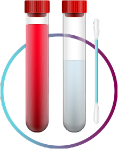
BLOOD or SALIVA SAMPLE
Germline
BRCA1/26


≈4%
A meta-analysisc investigated the prevalence of BRCA1/2 mutations (including germline) in 17,532 patients with prostate cancer8
Less Than 40% of Patients With mCRPC Receive Testing for BRCA1/2 or Other HRR Gene Mutations9
Not tested 61.8%
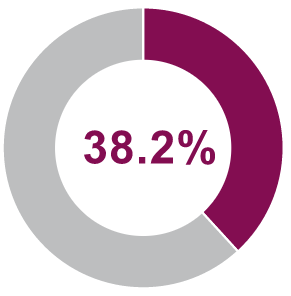
Any HRR gene tested
In a prospective, real-world survey (N=346), only 38.2% of US patients had testing for ≥1 of 15 HRR gene mutationsd
BRCA1/2 Mutations Can Be Somatic or Germline10
Germline BRCA mutations are inherited and present in all cells of an organism10-13

Mutations present in germ cells

All cells in an embryo contain mutations

All cells in an adult body contain mutations

Reproductive cells carry mutations that can be passed down to offspring

Identified by testing blood, saliva, or buccal swab
Somatic BRCA mutations are only present in affected cells11,12

No mutations present in germ cells

No mutations in embryo

Mutations in somatic cells; only cells arising from mutated cells affected

No reproductive cells carry mutations; cannot be passed down to offspring

Identified by testing tumor cells
Sample Considerations for Comprehensive Testing5,10,13-15
Tumor Tissue Tissue biopsy, surgical specimen5,10

Identifies germline and somatic mutations but cannot distinguish between them5
Plasma ctDNA Blood13

Identifies germline and somatic mutations but cannot distinguish between them13 Needs adequate levels of ctDNA14
Germline
Blood or saliva10,15-16
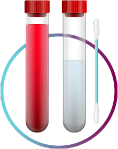
Does not identify somatic mutations15 May have familial implications10,16
When tumor tissue testing is not feasible, consider plasma ctDNA testing2,e
Black Men Are ≈50% Less Likely to Receive Germline Testing Than White Men17

54% of Black men

95% of White men
Germline testing rates were determined from a summary of 4 retrospective studies that included 4415 men, of whom 72.6% were White and 7.2% were Black17
Health Care Inequities Continue to Exist Among Black Men18
Prostate cancer treatment received after diagnosis among Medicare Part D enrollees19
The age-adjusted sHR=1.3 95% CI: 1.23-1.37; (P<0.001)20,f


Black men were associated with increased prostate cancer–specific mortality risk compared to White men20
The age-adjusted sHR=1.3 95% CI: 1.23-1.37; (P<0.001)20,f
Based on observational study with a SEER cohort (n=296,273) compared with a VA cohort of 5 regional hospitals (n=3972) and a cohort of 4 pooled NCI-sponsored RTOG RCTs (n=5854)20
Comprehensive Testing Can Help Inform Clinical Decisions in All Patients With Advanced Prostate Cancer
Almost 40% of Patients With Advanced Prostate Cancer May Have Actionable Mutations21
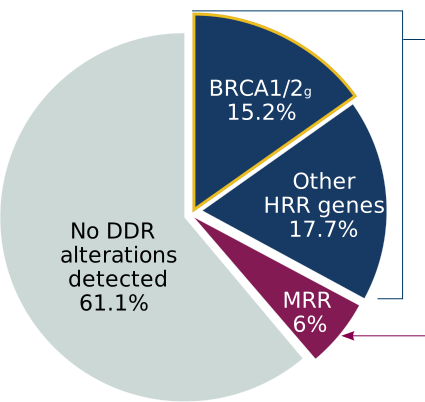
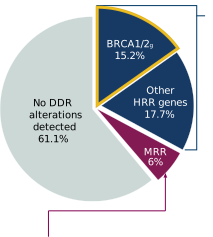
HRR 32.9%
BRCA1/2 and Other Homologous Recombination Repair (HRR) Genesh Are Important for Repair of DNA Double-Strand Breaks21
MMR 6%
Mismatch Repair (MMR) Genesi Are Important for Repair of DNA Replication Errors22
MMR 6%
Mismatch Repair (MMR) Genesi Are Important for Repair of DNA Replication Errors22
A Variety of Tests Is Available to Assess BRCA1/2 in Advanced Prostate Cancer
. |
Laboratory | Assay Name | Turnaround Time |
|---|---|---|---|
| TISSUE | Caris® Life Sciences | MI ProfileTM Comprehensive Testing (Tissue)23,24 | ≈10-14 days |
| Foundation Medicine | FoundationOne®CDx5,25,j | ≤12 days from receipt | |
| NeoGenomics | NeoTYPE® HRR Profile26 | 14 days | |
| Tempus | Tempus xT27,28,k (Solid Tumor) |
9 days from receipt |
 |
Foundation Medicine | FoundationOne®Liquid CDx13,25,j,l | ≤10 days from receipt |
| PLASMA ctDNA |
Tempus | Tempus xF29,30 | 7 days from receipt |
| Guardant Health, Inc | Guardant360® CDx31,32,m | 7 days |
 |
GenPath® | Hereditary Prostate Cancer Panel33-35 | 14-21 days |
| GERMLINE | GeneDx | Hereditary Prostate Cancer Panel36 | 2 weeks |
| Myriad Genetics® | MyRisk® Hereditary Cancer37,38 | ≤14 days | |
| Tempus xG (Powered by Ambry Genetics®) |
xG (CancerNext®)39,40 | 14-21 days from receipt |
This document is intended as educational information and is not intended as a complete list of available testing options. AstraZeneca is not responsible for any test provider and does not endorse any particular diagnostic test. The accuracy and results of diagnostic tests vary, and AstraZeneca shall have no liability arising from such testing. Information provided herein should in no way be considered as a guarantee of coverage, reimbursement, or patient assistance. Providers should contact third-party laboratories for information on their patient assistance programs. While diagnostic testing may assist providers in identifying appropriate treatment for patients, the decision and action should be decided by a provider in consultation with the patient. All products are trademarks of their respective holders; all rights reserved. Tests listed may include analysis of some, but not all, HRR and/or dMMR genes. Additionally, tests may assess for additional genes. Please see product specifications for a full list of genes investigated.
View the Lab Talk by Dr Ming Zhou
Germline and Somatic BRCA Testing in Metastatic Prostate Cancer
This Lab talk is from the perspective of the presenter and does not reflect the views of AstraZeneca. All health care providers appearing in this video have partnered with a third party to develop this content. This content is for educational purposes only. All testing, treatment, and prescribing decisions should be based on health care providers’ independent judgment. AstraZeneca does not guarantee that the suggestions and methods implemented here will work for your institute.
Footnotes
aResults were not adjusted for effects of different treatments among the different sets of patients and how these treatments may affect outcomes.1 bTumor testing cannot distinguish between germline and somatic mutations.4 cThe meta-analysis consisted of 265 publications across 23 cancer types; prevalence of BRCA1/2 mutations was reported in patients with breast, ovarian, prostate, and pancreatic cancer.8 dGene panel testing was conducted in a large prospective study to identify the following genes in the DNA repair process: ATM, BRCA1, BRCA2, BRIP1, BARD1, CDK12, CHEK1, CHEK2, FANCL, PALB2, PPP2R2A, RAD51B, RAD51C, RAD51D, and RAD54L.9 eThe panel strongly recommends a metastatic biopsy for histologic and molecular evaluation. This could include lymph node biopsy in patients with N1 disease. When unsafe or unfeasible, plasma ctDNA assay is an option, preferably collected during biochemical (PSA) and/or radiographic progression in order to maximize diagnostic yield.2 fBased on a SEER cohort of men diagnosed with nondistant metastatic prostate cancer. gBRCA1 and BRCA2 prevalence is 1.9% and 13.3%, respectively.21 hAdditional HRR genes and prevalence of alterations include: ATM (7.3%), CDK12 (6.9%), CHEK2 (1.9%), and other lower prevalence genes (HRR genes with <1% prevalence in advanced prostate cancer: PALB2 [0.4%], RAD51C [0.14%], RAD51D [0.4%], and FANCD2 [0.7%]).21 iMMR genes include MLH1, MSH2, and MSH6. Prevalence of MLH1, MSH2, and MSH6 alterations is 1.3%, 2.7%, and 2%, respectively.21 jFDA-approved diagnostic. kTests tumor and matched normal sample from blood or saliva. lThe test analyzes 324 genes and is FDA approved to detect and report substitutions, insertions and deletions (indels) in 311 genes, rearrangements in 4 genes, and copy number alterations in 3 genes, including BRCA1 and BRCA2. mThe test analyzes 74 genes and is FDA approved for the detection and reporting of single-nucleotide variants (SNVs), indels in 55 genes, copy number amplifications (CNAs) in 2 genes, and fusions in 4 genes.
Abbreviations
ADT, androgen deprivation therapy; ATM, ataxia-telangiectasia mutated; BARD1, BRCA1-associated RING domain protein 1; BRCA, breast cancer susceptibility gene; BRCA1, breast cancer susceptibility gene 1; BRCA2, breast cancer susceptibility gene 2; BRCA1/2, breast cancer susceptibility gene 1 and 2; BRIP1, BRCA1-interacting protein 1; CDK12, cyclin-dependent kinase 12; CHEK1, checkpoint kinase 1; CHEK2, checkpoint kinase 2; CI, confidence interval; ctDNA, circulating tumor DNA; DDR, DNA damage repair; dMMR, deficient mismatch repair; FANCL, Fanconi anemia complementation group L; FDA, US Food and Drug Administration; HRR, homologous recombination repair; mCRPC, metastatic castration-resistant prostate cancer; MLH1, MutL protein homolog 1; MMR, mismatch repair; MSH2, MutS homolog 2; MSH6, MutS homolog 6; MSI, microsatellite instability; NCCN, National Comprehensive Cancer Network; NCI, National Cancer Institute; PALB2, partner and localizer of BRCA2; PC, prostate cancer; PPP2R2A, protein phosphatase 2 regulatory subunit B alpha; RAD51B, RAD51 paralog B; RAD51C, RAD51 paralog C; RAD51D, RAD51 paralog D; RAD54L, RAD54-like; RCT, randomized clinical trial; RTOG, Radiation Therapy Oncology Group; SEER, Surveillance, Epidemiology, and End Results; sHR, subdistribution hazard ratio; TURP, trans-urethral resection of the prostate; US, United States; VA, Veterans Affairs.
References
1. Lowrance W, et al. J Urol. 2023;209(6):1082-1090. 2. Referenced with permission from the NCCN Clinical Practice Guidelines in Oncology (NCCN Guidelines®) for Prostate Cancer. V.4.2024. © National Comprehensive Cancer Network, Inc. 2024. All rights reserved. Accessed October 14, 2024. To view the most recent and complete version of the guideline, go online to NCCN.org. 3. Stewart MD, et al. Oncologist. 2022;27(3):167-174. 4. Na R, et al. Eur Urol. 2017;71(5):740-747. 5. FoundationOne®CDx technical information. Accessed October 14, 2024. https://info.foundationmedicine.com/hubfs/FMI%20Labels/FoundationOne_CDx_Label_Technical_Info.pdf. 6. de Bono J, et al. N Engl J Med. 2020;382(22):2091-2102. 7. de Bono J, et al. Presented at: ESMO Congress; September 27-October 1, 2019; Barcelona, Spain. Abstract 847PD. 8. Shao C, et al. Environ Mol Mutagen. 2022;63(6):308-316. 9. Leith A, et al. Future Oncol. 2022;18(8):937-951. 10. Cheng HH, et al. J Natl Compr Canc Netw. 2019;17(5):515-521. 11. National Institutes of Health. What is a gene variant and how do variants occur? Accessed October 14, 2024. https://medlineplus.gov/genetics/understanding/mutationsanddisorders/genemutation/. 12. Wu H, et al. Gene Ther. 2017;24(10):601-609. 13. FoundationOne®Liquid CDx technical information. Accessed October 14, 2024. https://assets.ctfassets.net/w98cd481qyp0/3a8jFw3KUjIU3RWPdcT9Ax/dcb2ffd6d8d9a40a65ccf663269cc39a/FoundationOne_Liquid_CDx_Label_Technical_Info.pdf. 14. Merker J, et al. J Clin Oncol. 2018;36(16):1631-1641. 15. BRACAnalysis CDx® technical Information. Accessed October 14, 2024. https://s3.amazonaws.com/myriad-web/BRACAnalysisCDxTS.pdf. 16. Frey M, et al. Gynecol Oncol Res Pract. 2017;4:4. 17. Briggs LG, et al. JCO Oncol Pract. 2023;19(5):e784-e793. 18. American Cancer Society. Cancer facts & figures for African American/Black people 2022-2024. Accessed October 14, 2024. https://www.cancer.org/content/dam/cancer-org/research/cancer-facts-and-statistics/cancer-facts-and-figures-for-african-americans/2022-2024-cff-aa.pdf. 19. Beebe-Dimmer JL, et al. Cancer Med. 2019;8(6):3325-3335. 20. Dess RT, et al. JAMA Oncol. 2019;5(7):975-983. 21. Lozano R, et al. Br J Cancer. 2021;124(3):552-563. 22. Sedhom R, Antonarakis ES. Future Oncol. 2019;15(20):2395-2411. 23. Caris® Life Sciences. Comprehensive molecular Profiling. Tumor tissue or whole blood. Accessed November 19, 2024. https://www.carislifesciences.com/wp-content/uploads/2024/05/TN0713-v2-Profile-Menu-Tissue-Blood_Singles.pdf. 24. Caris® Life Sciences. Tissue profiling. Accessed November 19, 2024. https://www.carislifesciences.com/products-and-services/molecular-profiling/tissue-profiling/. 25. Foundation Medicine. Our proven portfolio. That’s our Foundation. Accessed October 14, 2024. https://www.foundationmedicine.com/portfolio. 26. NeoGenomics. NeoTYPE® HRR Profile. Accessed October 14, 2024. https://neogenomics.com/test-menu/neotyper-hrr-profile. 27. Tempus. Tempus xT Solid Tumor + Normal Match DNA Sequencing. Accessed November 19, 2024. https://www.tempus.com/oncology/genomic-profiling/xt-xr/. 28. Tempus oncology xT assay. xT validation. Accessed November 19, 2024. https://www.tempus.com/wp-content/uploads/2024/05/Tempus-xT_Validation.pdf. 29. Tempus. Tempus xF/xF+ Liquid Biopsy. Accessed November 19, 2024. https://www.tempus.com/oncology/genomic-profiling/xf/. 30. Tempus oncology xF liquid biopsy assay. xF validation. Accessed November 19, 2024. https://www.tempus.com/wp-content/uploads/2024/03/Tempus-xF_Validation.pdf. 31. Guardant completeTM. FDA approved Guardant360® CDx. Accessed November 19, 2024. https://www.guardantcomplete.com/products/guardant360-cdx. 32. Guardant360® CDx. Technical information. Accessed October 14, 2024. https://www.guardantcomplete.com/assets/pdf/Guardant360-CDx-Technical-Information-US.pdf. 33. GenPath®. Hereditary Prostate Cancer. Accessed October 14, 2024. https://www.genpathdiagnostics.com/hcp/urology/hereditary-cancer-testing/prostate-cancer/. 34. GenPath®. Hereditary Prostate Cancer Panel. Test directory. Accessed October 14, 2024. https://www.genpathdiagnostics.com/test-directory/?tc=J665. 35. GenPath®. OnkoRiskTM specimen requirements. Accessed October 14, 2024. https://www.genpathdiagnostics.com/hcp/oncology/hereditary-cancer-testing/specimen-requirements/. 36. GeneDx. Hereditary Prostate Cancer Panel. Accessed October 14, 2024. https://providers.genedx.com/tests/detail/hereditary-prostate-cancer-panel-875. 37. Myriad Genetics®. MyRisk® Hereditary Cancer technical specifications. Accessed October 14, 2024. https://s3.amazonaws.com/myriad-library/technical-specifications/myRisk+Hereditary+Cancer+Tech+Specs.pdf. 38. Myriad Genetics®. Genetic testing FAQs. Accessed October 14, 2024. https://myriad.com/patients-families/genetic-testing-101/genetic-testing-faqs/#:~:text=How%20long%20does%20it%20take,Is%20genetic%20testing%20expensive?. 39. Tempus xG/xG+ Hereditary Cancer Germline Testing. Accessed October 14, 2024. https://www.tempus.com/oncology/genomic-profiling/xg/. 40. Tempus xG Hereditary Cancer Panels. Accessed October 14, 2024. https://www.tempus.com/wp-content/uploads/2024/07/Tempus-xGAmbry_Overview.pdf.
NCCN makes no warranties of any kind whatsoever regarding their content, use or application and disclaims any responsibility for their application or use in any way.